
The highest price does not always win
In August, the Grain Marketing Board was offering USD 432 per tonne for traditional grains, while local informal buyers were paying around USD 222 per tonne. On price alone, the choice seems obvious. Yet farmers in the Dande Valley continued selling small quantities of sorghum locally, often to meet immediate needs such as school fees.
APT’s 2026 Learning Study helps explain why. Sixty-nine percent of surveyed households said immediate cash needs influenced when they sold crops. And the headline price is only part of the transaction. GMB has minimum quantity and quality requirements, payment is by bank transfer, and payment can sometimes be significantly delayed. A local trader may offer less, but may also buy a small quantity at the farmgate and pay immediately. For a household that needs money today, cash in hand can outweigh a much better price later.
For APT, the lesson is that better market access is not simply about identifying the highest-paying buyer. It means understanding the whole transaction: price, quantity, quality, transport, payment method and, above all, timing. The challenge is to develop market and aggregation options that capture more value without ignoring the liquidity pressures that shape how farmers actually sell.
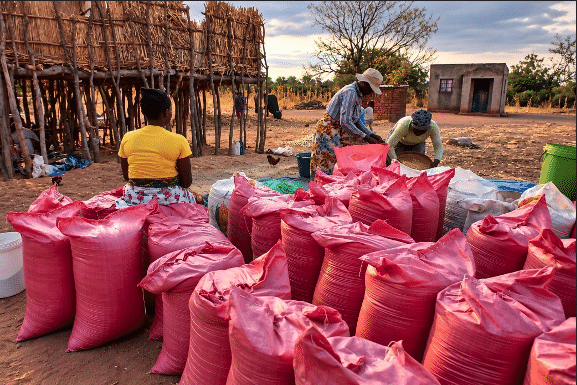
Choosing when to sell: Sorghum farmers may accept a lower local price when immediate cash, smaller quantities and faster payment matter more than waiting for a higher-paying formal market.
Mechanisation works — until the engine stops
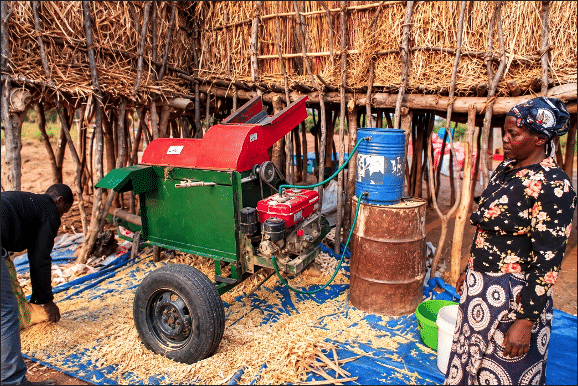
Mechanised threshing is one of the clearest examples of something farmers value because the benefit is immediate: work that once took days can be done far more quickly, with less labour. In August, seven threshing groups in the Dande Valley served 130 farmers and processed 152.32 tonnes of grain. The wider Learning Study also found threshing to be among the most appreciated village business services, particularly because it saves time and reduces physical labour.
But the season also exposed a less visible part of the business model: the machine itself has to survive the workload. Several groups experienced engine or starting problems. Tashinga replaced piston rings and modified its cooling system; Raramo and Ebenezer also required repairs, and three groups began questioning whether their engines were large enough for sustained commercial threshing.
The lesson for APT is simple: introducing machinery is only the beginning. A viable mechanisation business also needs the right equipment specification, trained operators, preventative maintenance, access to mechanics and the ability to finance repairs. Demand may prove the market exists — but reliability determines whether the enterprise can keep serving it.
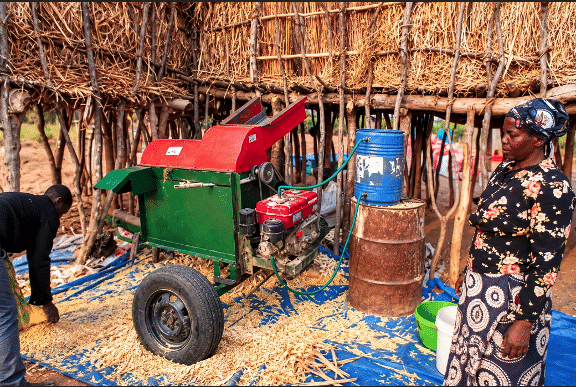
Keeping mechanisation moving: Tashinga modified the cooling system on its sorghum thresher after recurring engine problems — a reminder that maintenance and equipment reliability are as important as the machine itself.
Knowing El Niño is coming is not the same as being prepared
Farmers across the Dande Valley had widely heard that the 2026/27 season could bring below-normal and erratic rainfall associated with El Niño. But awareness was not yet translating consistently into action. By August, there was still limited evidence that households were changing how they stored grain, conserved livestock feed, managed water or planned production for a potentially difficult season.
APT’s Learning Study found the same gap. Many households appeared inclined to wait until conditions visibly deteriorated before responding. By then, some of the best options — retaining grain, preserving crop residues, preparing livestock feed, choosing short-duration crops or selling livestock before condition falls — may already be harder or more costly.
The lesson is that climate information only has value if it changes decisions early enough to matter. For APT, the focus is therefore shifting from simply communicating seasonal risk to helping households translate that warning into practical choices before the rains begin. Preparedness is not one action: it is a series of small decisions made early enough to protect food, livestock, income and productive assets.
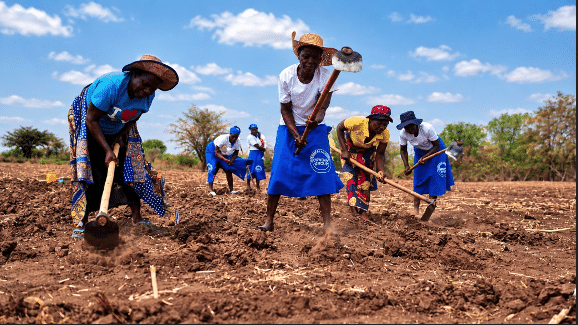
Preparing before the season: Farmers undertake manual land preparation ahead of the rains, one of several early actions that can strengthen preparedness for a more difficult and erratic season.
Why storage may matter as much as production
Producing a good crop is only half the job. APT’s 2026 Learning Study found that 57% of surveyed households had experienced post-harvest losses, with pests and rodents the leading cause. Losses were also linked to moisture, livestock damage, delayed threshing and poor storage.
That matters even more when households need to hold grain for longer. Sorghum is both a food reserve and a source of cash, and farmers may choose to sell gradually as needs arise. If grain cannot be stored safely, households can lose food, lose income and lose the option of waiting for a better market. The August report therefore identifies protecting retained grain as an immediate priority ahead of the 2026/27 season.
For APT, the lesson is that resilience is not only about producing more. It is also about protecting what has already been produced. Better drying, storage hygiene, timely threshing and access to effective grain protectants may be less visible than a new production technology, but they can be just as important to household food security and market choices.
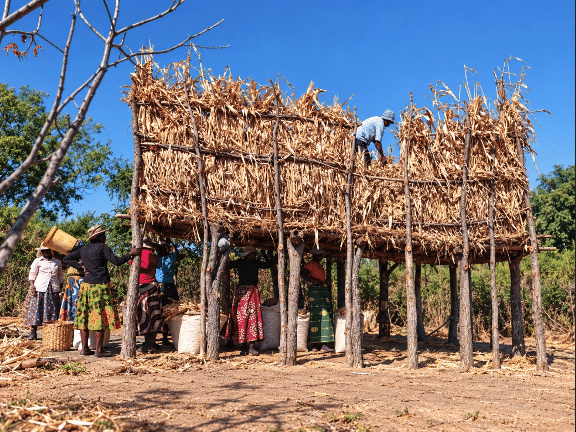
Protecting the harvest: Safe grain storage is not just about preserving food — it also helps households reduce losses, hold grain for longer and keep more choice over when and how they sell.
A school internet connection becomes a village business
At Kapanda Primary School, internet access is being tested not simply as a service for the school, but as a small community business. SFSP financed the initial infrastructure, while the operating model relies on the sale of Wi-Fi vouchers to cover the monthly Starlink subscription and other running costs.
In August, 30 people used the service, including eight repeat users. The school sold 42 one-week vouchers at USD 1 each, generating USD 42 against a monthly subscription cost of USD 36. That is encouraging, although the balance should not yet be treated as pure profit: maintenance, repairs and other operating costs also have to be covered if the service is to remain genuinely self-financing.
What makes the model particularly interesting is what happens when the service generates a surplus. Kapanda is investing some of the proceeds from voucher sales in its school vegetable garden, whose produce helps feed pupils. At the same time, nearby businesses can use the connection to communicate with suppliers in Harare and Mount Darwin. The experiment is therefore about more than getting a school online: it is testing whether a piece of digital infrastructure can sustain itself while generating wider benefits for the community.
For APT, that is the real test of the business model — not simply whether the internet works, but whether local demand can keep it working and create value beyond the connection itself.
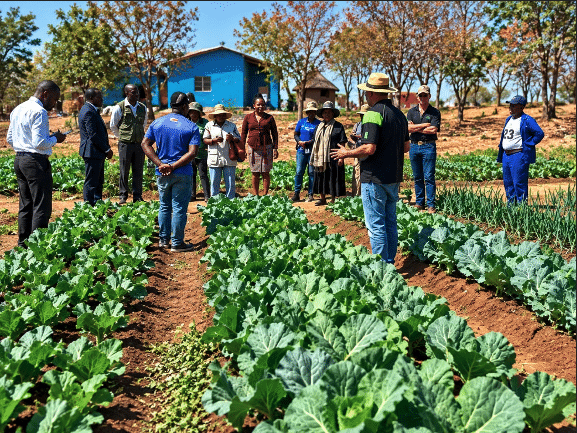
From connectivity to food: The Kapanda school community shows visitors the vegetable garden, where produce helps feed pupils and where some surplus income from Wi‑Fi voucher sales is being reinvested.
