
When the threshing stops, the decisions begin
November 2, 2026
When a village business gets a competitor
November 2, 2026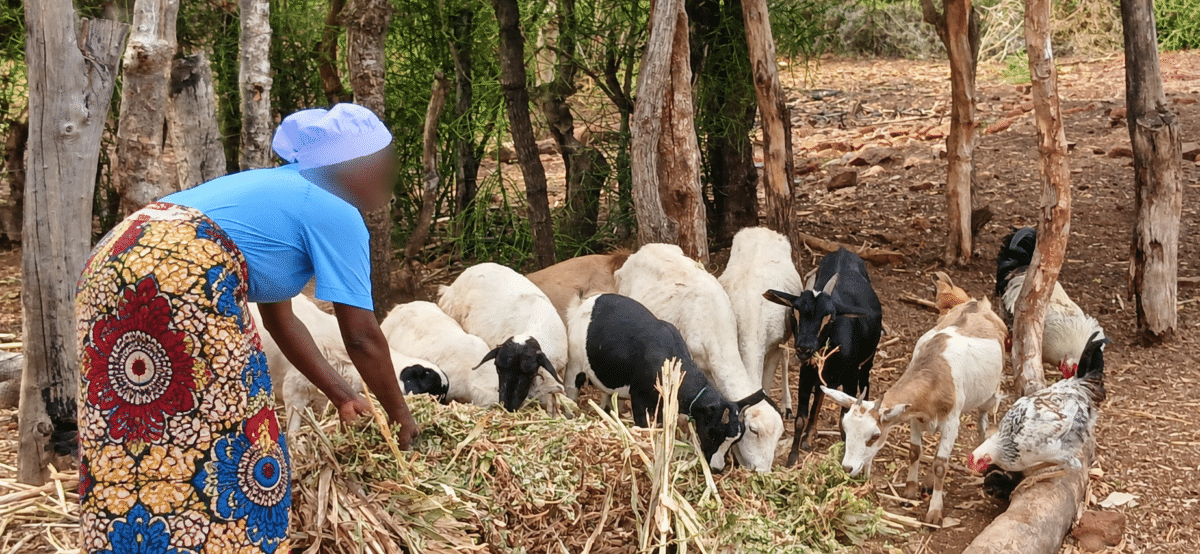
Preparing for the lean months: A farmer in Mount Darwin feeds sheep and goats with hay conserved earlier in the year, demonstrating how advance fodder preparation can help households manage declining natural grazing during the dry season.
By September, the dry season was taking its toll on livestock in Zimbabwe’s Dande Valley. Natural grazing was becoming scarce, water supplies were declining, and cattle were beginning to lose condition. But in Chigango village, Ward 33, Mrs Kambezo was feeding her sheep and goats hay that had been baled four months earlier, in May.
The hay provided a source of supplementary feed at a time when natural grazing was increasingly limited. It was a simple example of planning ahead: conserving fodder when material was available, rather than waiting until feed shortages became severe. Not every household had made such preparations, and the wider availability of conserved fodder remained limited. Nevertheless, the Kambezo household’s experience provided a useful illustration of what farmers can do with locally available resources.
For APT, the observation adds a practical dimension to efforts to strengthen livestock resilience. Encouraging fodder conservation is one thing; understanding how farmers actually prepare, store and use supplementary feed is another. Experiences such as this provide a starting point for identifying what works locally, what prevents wider adoption and how more households might be supported to prepare for the annual dry-season feeding challenge.
